I ran a 5K yesterday (thank you for letting me indulge in a little bit of smugness). It was an exceptionally well organized and run race. I was quite impressed. The race was hosted by the Navy Federal Credit Union and it began and ended on their campus. It is a beautiful campus with lots of trees and a small pond. What struck me the most however was the path that ran around the building and included an exercise course and equipment. Clearly the expectation is that before, during, or after work employees can work out there.
It got me thinking about the differences between the business world and education. Teachers can not take time to work out during their lunch hour (because it's not even close to an hour). Teachers can't arrive late or leave early without it being a huge hassle to get classrooms covered. And if you do, you know your students won't get the same level of instruction as if you were there. Teachers can't even make simple phone calls throughout the day or go to the bathroom at any given time.
I don't mean for this to sound whiny or to be complaining. The great majority of the time, I'm not too bothered by this. What I am bothered by is how little I think most people understand about the realities in a school and classroom. Even my husband, who is a college professor and who puts forth significant efforts to understand, doesn't really get it.
I'm not sure it's possible to fully comprehend without spending at least one complete day with a teacher. I just know that I'd feel a lot better about how teachers are viewed in our society if I thought more of the general public had a decent understanding of what it is truly like.
Title of this post from the book by Dave Eggers, Daniel Moulthrop, and Ninive Clements Calegari.
Sunday, September 23, 2007


SOL Celebration
Before I begin ranting, it's important for me to mention that I love my school. I am so very lucky to teach there and I wouldn't trade it for the world. That said, every once in a while something happens there that drives me nuts. This time, I'm probably alone in my frustration.
On Friday, our administration arranged things so that all classrooms were covered for the first hour of the day so that we had time to relax. They also brought in a catered breakfast (from the culinary classes at the high school). Are you wondering why I'm frustrated by such generosity? All of this was done to celebrate the fact that we made AYP (annual yearly progress).
This was very kind of them. And we should celebrate this fact. But...
Celebrating SOL scores gives them an even greater importance. Our principal made a point of saying that we had made AYP without sacrificing best practice instruction. And I think she's right. But I'm worried about our priorities. Having such an elaborate celebration sends a message that these scores are really important. They are important, but so are many other things we do at school. I don't believe that SOL scores are more important than our Developmental Reading Assessment scores, our number of students qualifying for gifted services, or the number of students being suspended. I throw out those things, not because I think they are exceptionally important, but because they are just as easily quantified as SOL scores.
I'm concerned that we are defining ourselves by these scores. We need to see the big picture of what we are doing with students and why. Test scores should just be one small piece of that picture.
On Friday, our administration arranged things so that all classrooms were covered for the first hour of the day so that we had time to relax. They also brought in a catered breakfast (from the culinary classes at the high school). Are you wondering why I'm frustrated by such generosity? All of this was done to celebrate the fact that we made AYP (annual yearly progress).
This was very kind of them. And we should celebrate this fact. But...
Celebrating SOL scores gives them an even greater importance. Our principal made a point of saying that we had made AYP without sacrificing best practice instruction. And I think she's right. But I'm worried about our priorities. Having such an elaborate celebration sends a message that these scores are really important. They are important, but so are many other things we do at school. I don't believe that SOL scores are more important than our Developmental Reading Assessment scores, our number of students qualifying for gifted services, or the number of students being suspended. I throw out those things, not because I think they are exceptionally important, but because they are just as easily quantified as SOL scores.
I'm concerned that we are defining ourselves by these scores. We need to see the big picture of what we are doing with students and why. Test scores should just be one small piece of that picture.
Sunday, September 16, 2007
Philosophy of Education
If you went through a traditional college education program you most likely had to write your philosophy of education at least once, possibly numerous times. Then you probably had to have one to turn in with job applications. Writing this philosophy is something young/new teachers do fairly often.
Old/experienced teachers don't end up doing so. Although the good ones think about it without realizing quite a bit. I've been thinking about it because, in my tenth year of teaching, I have to write one. I wouldn't have chosen to spend a lot of time writing it, if the choice were mine. But I'm finding the process to be beneficial. I'm not yet ready to post anything concrete for my philosophy, but the reflection required and the synthesis I'm doing is helping me grow as a teacher.
I'm not a naturally reflective person and I think that keeps me from growing as a teacher as much as I would like. This blog has pushed me to do more deep thinking about my teaching and about education in general. I feel lucky to have found a way to make this happen for me. In the past it took an external impetus of some sort to force me into reflection (graduate classes, National Board process, working with student teachers). While those are all wonderful, and I still take classes and work with student teachers, I'm glad to have discovered a way to reflect more regularly and on topics that I choose rather than reflecting solely in response to others' requirements or needs.
Thoughts about my philosophy will be showing up here over the next few weeks I'm sure. If you have any thoughts to share, I'd love to hear them!
Old/experienced teachers don't end up doing so. Although the good ones think about it without realizing quite a bit. I've been thinking about it because, in my tenth year of teaching, I have to write one. I wouldn't have chosen to spend a lot of time writing it, if the choice were mine. But I'm finding the process to be beneficial. I'm not yet ready to post anything concrete for my philosophy, but the reflection required and the synthesis I'm doing is helping me grow as a teacher.
I'm not a naturally reflective person and I think that keeps me from growing as a teacher as much as I would like. This blog has pushed me to do more deep thinking about my teaching and about education in general. I feel lucky to have found a way to make this happen for me. In the past it took an external impetus of some sort to force me into reflection (graduate classes, National Board process, working with student teachers). While those are all wonderful, and I still take classes and work with student teachers, I'm glad to have discovered a way to reflect more regularly and on topics that I choose rather than reflecting solely in response to others' requirements or needs.
Thoughts about my philosophy will be showing up here over the next few weeks I'm sure. If you have any thoughts to share, I'd love to hear them!
Blog Observations
I read a wide selection of blogs regularly. They fall into categories of education/teaching, parenting, children's literature, and random fun stuff. And then I blog in three different places, here, This Must Be Thursday, and a blog my husband and I keep about our daughters.
Recently I've noticed that I only manage to find the time to do my blogging on the weekends. Between teaching and being a mom I can't get it done during the week. That doesn't bother me, but it appears to make me different from the majority of bloggers I read. Very little seems to get posted on the weekends, but a ton is happening during the week. This is true in all of the categories I read. I'm left wondering what makes my life so different from everyone else.
Recently I've noticed that I only manage to find the time to do my blogging on the weekends. Between teaching and being a mom I can't get it done during the week. That doesn't bother me, but it appears to make me different from the majority of bloggers I read. Very little seems to get posted on the weekends, but a ton is happening during the week. This is true in all of the categories I read. I'm left wondering what makes my life so different from everyone else.
Sunday, September 09, 2007
Computer Literacy
I was reading the various feeds to my Google Reader a few minutes ago. Reading one specific post my four-year-old noticed that I was using an arrow as I read. She asked if I was pushing the up or down arrow. I told her that I was using the down arrow. She looked at the screen and noticed the text scrolling up. She asked, "Why is it going up if you are pushing down?"
Good question.
Good question.
Who Knows Best?
I've read a couple of blog posts lately that have done two things:
Jeff, at Techist, wrote about a similar issue from the point of view of a college professor. He doesn't face these issues at a university (although, give them time) but has run into trouble accessing sites when he presents to K-12 teachers.
I find the two posts interesting lenses on the same issue. Sherry is venting about her situation, which is faced by many teachers in the public schools. We can identify with what she has to say. Jeff is looking at this from a more academic stance and considering the reasons for such filters and the consequences.
Read them both. Together they help show a fuller picture of this issue and the challenges facing all of us.
I know there are many other wonderful posts out there on this issue, but these two really struck me.
- made me think about who makes decisions in school districts and who should really be making those decisions
- made me grateful to teach where I am
Jeff, at Techist, wrote about a similar issue from the point of view of a college professor. He doesn't face these issues at a university (although, give them time) but has run into trouble accessing sites when he presents to K-12 teachers.
I find the two posts interesting lenses on the same issue. Sherry is venting about her situation, which is faced by many teachers in the public schools. We can identify with what she has to say. Jeff is looking at this from a more academic stance and considering the reasons for such filters and the consequences.
Read them both. Together they help show a fuller picture of this issue and the challenges facing all of us.
I know there are many other wonderful posts out there on this issue, but these two really struck me.
Saturday, September 01, 2007
Top 5 Lists in Grade 5
We're halfway through the first quarter! Last week was the fifth week of school for us so my class did five Top 5 lists to celebrate Week 5 in Grade 5. I had the students brainstorm their own thoughts for the list over the past weekend. We collected one item for each list per student and then voted. I was alternately impressed, surprised, and disturbed by their choices. I'd never done this before, but I'll be doing it again for the fascinating insights into their thinking. One of my goals was to have our top 5 lists be more than simply lists of favorites. Here are the lists:
Top 5 Books that Made Us Think
Top 5 Authors that Move Us
(I haven't read anything by #3, #4, or #5. Again, I think I better get with it. I love Sharon Creech. Good for these kids for recognizing her genius.)
Top 5 Famous Virginians
(We study Virginia history in fourth grade so I figured my students would have lots of ideas here. Mostly they did, but I had to nix Abe Lincoln, Ulysses S. Grant, and Helen Keller. I let Harriet Tubman in, although calling her a Virginian is a serious stretch. And really, Stonewall Jackson is number two on their list? And William Henry Harrison makes the list at all? Are they crazy? No George Washington, James Madison, George Mason, Maggie Lena Walker, Arthur Ashe, Robert E Lee - even Harry F Byrd, Sr would make more sense to me. Oh well. I blame their fourth grade teacher.)
Top 5 Most Beautiful Math Concepts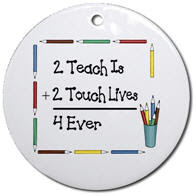
Top 5 Biggest Science Ahas!
I'd love to see what other classes come up with. Then maybe I could determine if my kids are as strange as they seem or more like fifth graders everywhere.
Top 5 Books that Made Us Think
- Harry Potter and the Deathly Hallows (#7)
- The Westing Game by Ellen Raskin
- The Dangerous Book for Boys by Conn and Hal Iggulden
- Harry Potter and the Order of the Phoenix (#5)
- Eragon by Christopher Paolini
Top 5 Authors that Move Us
(I haven't read anything by #3, #4, or #5. Again, I think I better get with it. I love Sharon Creech. Good for these kids for recognizing her genius.)
Top 5 Famous Virginians
(We study Virginia history in fourth grade so I figured my students would have lots of ideas here. Mostly they did, but I had to nix Abe Lincoln, Ulysses S. Grant, and Helen Keller. I let Harriet Tubman in, although calling her a Virginian is a serious stretch. And really, Stonewall Jackson is number two on their list? And William Henry Harrison makes the list at all? Are they crazy? No George Washington, James Madison, George Mason, Maggie Lena Walker, Arthur Ashe, Robert E Lee - even Harry F Byrd, Sr would make more sense to me. Oh well. I blame their fourth grade teacher.)
Top 5 Most Beautiful Math Concepts

- Challenge 24
- Square Roots
- 2 Teach is + 2 Touch Lives = 4 ever
- Multiplication
- Multiplying by 9
Top 5 Biggest Science Ahas!
- Atoms
- Animals
- Weather
- The sun is one of the smallest stars.
- Light
I'd love to see what other classes come up with. Then maybe I could determine if my kids are as strange as they seem or more like fifth graders everywhere.
Monday, August 27, 2007
NCLB & GT
We in education seem to be addicted to acronyms. NCLB (No Child Left Behind) is probably one of the best known, however.
Several years ago, when NCLB was just getting started, Carol Ann Tomlinson spoke extensively about the damage it would do to our gifted students(GT = gifted and talented). Faced with having to make all students meet benchmarks, teachers would not be able to focus any real attention on students who were likely to pass tests without our support.
I believe, and it seems I'm not alone, that she was correct in her prediction. In some ways, this seems like a no-brainer. Of course schools will focus on students who might not pass the test. We will be judged harshly based on those scores. If students are likely to pass, with or without us, they can go ahead and do so.
As a result, those students who naturally do well in school or who have lots of family support for their education or who simply test well are likely to be allowed to float along without being challenged academically. It seems to me that all that NCLB has done is change which children are left behind.
Several years ago, when NCLB was just getting started, Carol Ann Tomlinson spoke extensively about the damage it would do to our gifted students(GT = gifted and talented). Faced with having to make all students meet benchmarks, teachers would not be able to focus any real attention on students who were likely to pass tests without our support.
I believe, and it seems I'm not alone, that she was correct in her prediction. In some ways, this seems like a no-brainer. Of course schools will focus on students who might not pass the test. We will be judged harshly based on those scores. If students are likely to pass, with or without us, they can go ahead and do so.
As a result, those students who naturally do well in school or who have lots of family support for their education or who simply test well are likely to be allowed to float along without being challenged academically. It seems to me that all that NCLB has done is change which children are left behind.
Saturday, August 25, 2007
Preschool
Preschool is clearly on my mind right now. I believe in the importance of the learning that happens prior to kindergarten. However, I'm skeptical that the plan in Texas to accredit preschools is really going to improve that learning.
Children should come into kindergarten able to identify some letters of the alphabet and read basic words, such as "cat," Dr. Landry said. They also should get along with other children and follow directions.I'm not convinced that children should be able to do all of those things. We've already made kindergarten much more academic than it used to be, it seems unfair to do the same thing to preschool.
Lyn Voegeli, who runs private preschools in Richardson and Frisco, worries that the pressures tied to accountability in public schools will trickle down. She doesn't want to see preschoolers poring over worksheets instead of a puzzle or a book.Exactly my fear. So much research has shown the importance of play for young children in their learning. It's not hard to imagine the move to worksheets happening.
We need to educate parents to be sure that they understand what is actually important and valuable for their children at different developmental stages.States are pumping more money into pre-kindergarten programs because research shows an early start can narrow the educational gap between poor and wealthier students.
But Texas is ahead of the curve in holding the programs accountable, said Jonathan Plucker, an educational psychologist who heads Indiana University's Center for Evaluation and Education Policy.
"It makes perfect sense that we put some of these things in place for accountability purposes and for parents," Dr. Plucker said.
Thursday, August 23, 2007
K-8 Schools
I finished a master's degree in Social Foundations of Education a few years ago. It was a fantastic experience and prompted me to think deeply about various large issues in education. One issue that interests me greatly is the idea of K-8 schools.
Prince George's county is discussing the possibility of expanding the number of K-8 schools in their district.
The design of K-8 schools is critical for their success. The communication and collaboration across the grade levels is also important. But, it seems to me to be an idea worth trying.
Prince George's county is discussing the possibility of expanding the number of K-8 schools in their district.
Personally, I believe that middle schoolers should be shipped off to another planet for those two (or even three) years. They don't like themselves, which is not surprising given how unlikeable they are. (This is based mostly on my memories of middle school.) However, given the likelihood of that happening, I believe that K-8 schools is the next best option. Isolating students at that age seems like a bad idea."We were having some challenges with our middle-schoolers and felt that if we could put them, many times with their brothers and sisters, they would become the leaders, they would become the models," Smith said. "They are the models for the younger kids. Their behavior is much better. They're much more willing to listen to adults, much more willing to help everyone in the school."
She said another benefit is that teachers across several grades can communicate more easily, allowing students to receive more consistent and focused education over several years.
The design of K-8 schools is critical for their success. The communication and collaboration across the grade levels is also important. But, it seems to me to be an idea worth trying.
Meetings
One of the downsides of teaching in a modified calendar school is the number of meetings we have to attend now. As the rest of the school district is gearing up to get started there are numerous meetings going on. This week I was out of the building Tuesday, Wednesday, and Thursday for three different meetings. (I hope my students remember me next week!)
One interesting facet of attending these meetings now, a month into the school year, rather than before school started, is that I have less patience for my time being wasted. If I have to be out of the classroom then I expect my time to be used well.
In all the meetings, at least three-quarters of the information could have been handled in email. In two of the meetings PowerPoint presentations were read to us (a personal pet peeve). The most useful time in each meeting was the opportunity to talk, plan, organize, and work with one or more colleagues. That time was essential. It also allowed us to reflect and process information we had been given. Frequently so much information is crammed into meetings for educators that we have no time for processing. The result is that we don't make use of the information because we haven't been able to figure out how it affects us, how to make it our own.
Should I end up in a role in which I am planning meetings or professional development for teachers I want to remember two things (at least):
One interesting facet of attending these meetings now, a month into the school year, rather than before school started, is that I have less patience for my time being wasted. If I have to be out of the classroom then I expect my time to be used well.
In all the meetings, at least three-quarters of the information could have been handled in email. In two of the meetings PowerPoint presentations were read to us (a personal pet peeve). The most useful time in each meeting was the opportunity to talk, plan, organize, and work with one or more colleagues. That time was essential. It also allowed us to reflect and process information we had been given. Frequently so much information is crammed into meetings for educators that we have no time for processing. The result is that we don't make use of the information because we haven't been able to figure out how it affects us, how to make it our own.
Should I end up in a role in which I am planning meetings or professional development for teachers I want to remember two things (at least):
- Respect teachers' time. Every moment in meetings and PD should be valuable and worthwhile.
- Give them time to reflect and process.
Sunday, August 19, 2007
Governor Kaine & Campaign Promises
One of Tim Kaine's campaign promises two years ago was universal pre-school. This is a popular concept with parents (not surprising given the cost of good child care). However, it's an expensive proposition.
I'm a firm believer in the importance of those early years in a child's life. Watching my two girls and seeing from a distance my various nieces and nephews, I've come to recognize how much powerful learning happens long before kids begin school. There are many families who are unable to offer their children the opportunities they need to be as successful as possible when they reach school age. (I'm sure there are also families who simply don't do so. It doesn't matter, the children are the ones who pay the price and that's criminal.)
Kaine is now proposing to expand publicly funded pre-school for children in families that qualify for reduced lunch (currently only families who qualify for free lunch receive free pre-school). This would expand the program to 17,000 more children and cost $75 million a year. It's not perfect, but it's a step in the right direction.
A Washington Post article about Kaine's plan quotes James B. Hunt, Jr., former governor of North Carolina, about this issue.
What a simple, powerful statement.
I'm a firm believer in the importance of those early years in a child's life. Watching my two girls and seeing from a distance my various nieces and nephews, I've come to recognize how much powerful learning happens long before kids begin school. There are many families who are unable to offer their children the opportunities they need to be as successful as possible when they reach school age. (I'm sure there are also families who simply don't do so. It doesn't matter, the children are the ones who pay the price and that's criminal.)
Kaine is now proposing to expand publicly funded pre-school for children in families that qualify for reduced lunch (currently only families who qualify for free lunch receive free pre-school). This would expand the program to 17,000 more children and cost $75 million a year. It's not perfect, but it's a step in the right direction.
A Washington Post article about Kaine's plan quotes James B. Hunt, Jr., former governor of North Carolina, about this issue.
Ask [legislators] what they do for K-12; they fund it 100 percent. Ask them what they do for higher ed; they fund it. This is more important," Hunt said. "This is necessary for those other things to work.
What a simple, powerful statement.
Reading Recovery Earns Accolades
The federal What Works Clearinghouse (love the name!) has just published a review of beginning reading programs. (Education Week has an interesting article about it.) The What Works Clearinghouse does not easily recommend any program. The reading programs they reviewed are looked at in four areas, alphabetics, fluency, comprehension, and general reading achievement. They are found to have positive effects, potentially positive effects, mixed effects, no discernible effects, potentially negative effects, or negative effects. Only one program, out of twenty-four, showed positive and/or potentially positive effects in all four areas.
Reading this made me want to shout from the rooftops, "Reading recovery works!" Of course it does. In reading recovery trained teachers meet one-on-one with struggling students everyday to read and write. Having observed reading recovery lessons in my school, I have seen firsthand the power in the structure and time spent with these students.
The review is quite fascinating to see. There are very few programs that have earned 'positive effects' in any area much less in multiple. This may be simply because the What Works Clearinghouse is unwilling to slap that label on without significant support for it. Or, it could be that many of our reading programs do not address the full range of skills necessary to read well.
Just one program was found to have positive effects or potentially positive effects across all four of the domains in the review—alphabetics, fluency, comprehension, and general reading achievement. That program, Reading Recovery, an intensive, one-on-one tutoring program, has drawn criticism over the past few years from prominent researchers and federal officials who claimed it was not scientifically based.
Reading this made me want to shout from the rooftops, "Reading recovery works!" Of course it does. In reading recovery trained teachers meet one-on-one with struggling students everyday to read and write. Having observed reading recovery lessons in my school, I have seen firsthand the power in the structure and time spent with these students.
The review is quite fascinating to see. There are very few programs that have earned 'positive effects' in any area much less in multiple. This may be simply because the What Works Clearinghouse is unwilling to slap that label on without significant support for it. Or, it could be that many of our reading programs do not address the full range of skills necessary to read well.
Try and Try Again
Organized Chaos had a fantastic post last week about the trouble with education. The gist of her thinking is that it is impossible to know exactly what to do at all times to meet the needs of all kids.
There's no panacea. We do the best we can everyday and when we screw up, we start over, giving our best again.
You can do everything by the book and still have the kids fall apart. Your lesson can look perfect and the kids can learn nothing. Your lesson can look like a disaster but actually be successful. And sometimes there is no way to know how it's going to turn out.It's hard to accept the idea that so much is up in the air all the time, that we control so little in the classroom. And that is a major challenge, but it is also part of the joy. Getting to know our students, learning their personalities, needs, interests, talents, styles and such is the key to teaching them well. Doing all of this takes time and energy, things teachers may have very little of.
There's no panacea. We do the best we can everyday and when we screw up, we start over, giving our best again.
Failing Students
Standing at the copier on Friday, a colleague showed me a test taken by a student in her class. This young man is identified as having learning disabilities and took a modified version of this math test with one-on-one support to ensure he understood the directions and questions. In spite of all of this, he earned a D. Her question to me was what to do. Should she accept that the modified test and extra support should have been enough and record the D?
I wasn't sure what to say to her. This question is one I have struggled with for years.
Finally I asked her if she thought he understood the concepts being tested. She said he didn't. My response then was that it doesn't matter how much the test was modified or how much support he was given or if he had the opportunity to take the test again. If he doesn't understand the material then the test is irrelevant. He needs to learn the concepts first.
The conversation brought me back to one of my biggest concerns in education today. We (teachers, students, parents, etc.) get so caught up in grades that we often lose sight of the actual learning. It doesn't really matter what grade a child earns; what matters is the depth of their understanding about the concepts.
If we know a child doesn't understand and hasn't learned something, what is the purpose of giving a test? Wouldn't our time be better spent teaching?
I wasn't sure what to say to her. This question is one I have struggled with for years.
Finally I asked her if she thought he understood the concepts being tested. She said he didn't. My response then was that it doesn't matter how much the test was modified or how much support he was given or if he had the opportunity to take the test again. If he doesn't understand the material then the test is irrelevant. He needs to learn the concepts first.
The conversation brought me back to one of my biggest concerns in education today. We (teachers, students, parents, etc.) get so caught up in grades that we often lose sight of the actual learning. It doesn't really matter what grade a child earns; what matters is the depth of their understanding about the concepts.
If we know a child doesn't understand and hasn't learned something, what is the purpose of giving a test? Wouldn't our time be better spent teaching?
Wednesday, August 15, 2007
Web 2.0 Challenges
I've gotten motivated to really try some exciting things in technology with my students this year. BlackBoard now offers us wikis and blogs. We've got five wikis going (teamwork discussion, books list, science research questions, "Math Curse" by Jon Scieszka exploration, and interesting websites) so far. In addition, each student has a blog. They'll use these to write about their reflections on their reading and respond to one another. I anticipate other uses of the blogs as well, but we'll start here.
The challenge is that there is no way for me to know quickly when any of these items have been updated. I want to monitor them to be sure that the content is appropriate and to ensure that students are not leaving comments for one another that are unacceptable. However, the RSS feed option is turned off because of security concerns. So, my only option is to look at each wiki and each blog and click on each individual page and set of comments. That's five wikis and twenty blogs. It starts to seem like it isn't worth my time after all.
I really want this to work. I love the idea that using the wikis allows for collaboration and discussions that can continue beyond our limited time at school. Writing on the blogs offers a more authentic experience and wider audience than simply writing for me. Any advice on how to do this without spending hours clicking the mouse?
The challenge is that there is no way for me to know quickly when any of these items have been updated. I want to monitor them to be sure that the content is appropriate and to ensure that students are not leaving comments for one another that are unacceptable. However, the RSS feed option is turned off because of security concerns. So, my only option is to look at each wiki and each blog and click on each individual page and set of comments. That's five wikis and twenty blogs. It starts to seem like it isn't worth my time after all.
I really want this to work. I love the idea that using the wikis allows for collaboration and discussions that can continue beyond our limited time at school. Writing on the blogs offers a more authentic experience and wider audience than simply writing for me. Any advice on how to do this without spending hours clicking the mouse?
Friday, August 10, 2007
Back to School Night Rethought


Thanks to Dan and to some tech folks in my county, I'm rethinking PowerPoint. That's a good thing. The bad thing is, in typical fashion for me, I'm doing it last minute. So, these slides for Back to School Night don't impress me greatly, but they feel like I'm moving in the right direction.
I teach in a school with many different languages spoken at home and families from very diverse backgrounds. I hope that giving them a presentation with more visuals and less text will help them better understand my philosophy and goals for the year.
Next year I'd like to use pictures of students doing many of the activities I talk about. I included some of that this year, but not nearly enough. And these images don't do as good a job of illustrating the ideas behind them as I would like (which is what I get for trying to put it together in two days). I think it is an improvement over a presentation full of words that is either read to them or talked over while they try to read. I sent them home with a page of information summing up what I had discussed. I'll post this presentation and that page on our class site for those who weren't there or who were but would like to look more closely at things.
I'm not a fan of PowerPoint, but I hope that I'm becoming a more intelligent user of the tool.
Sunday, August 05, 2007
Homework Reflections
Tim, over at Assorted Stuff, posted about Jay Mathews' article in the Washington Post about homework. Tim's opening thought echoed my response to the article.
It doesn’t happen often, but this morning I find myself in agreement with Jay Mathews.
A colleague emailed the article to me and a couple of other teachers, stating that she likes the idea. I had to agree. Mathews is recommending that we back off of homework in the elementary school. His main point is that we should just have kids reading and not spend time on other busy work. He doesn't believe this is a good idea for middle schools or high schools; which feels to me like someone who is still clinging to his old beliefs and is unwilling to break with tradition too quickly.
I have struggled with the idea of homework for ten years now. The first issue I faced was that I don't want to grade all of it. I can find work for my students to do at home, and most of it will be at least somewhat worth their time. But then I need to do something with it. And I don't want to. There are more important things for me to be doing as a teacher.
So, last year I drastically changed my homework expectations and requirements. My students read every night (that's been true for years) and complete a math log (this involves playing math games or reflecting on a 'math moment' in their day). The only other homework they have regularly are quotes and riddles. I give them two quotes a week to respond to. They write reflections and share their thinking about the quotes. We discuss their thoughts on Fridays. The riddles come in a variety of shapes and sizes, but are essentially brain teasers of different sorts. I don't expect every student to find the answer to all of them, but I hope that attempting them is stretching their thinking a little. My goal with this homework is to have students who are thinking more deeply.
Tim's post hit on one thing I've been debating for this school year. He is talking about what high schoolers should be doing, but I think it applies to my fifth graders, too.
And that writing should be for an audience outside of the closed classroom and go beyond the formal, structured assignments traditionally imposed in class.
It doesn’t happen often, but this morning I find myself in agreement with Jay Mathews.
A colleague emailed the article to me and a couple of other teachers, stating that she likes the idea. I had to agree. Mathews is recommending that we back off of homework in the elementary school. His main point is that we should just have kids reading and not spend time on other busy work. He doesn't believe this is a good idea for middle schools or high schools; which feels to me like someone who is still clinging to his old beliefs and is unwilling to break with tradition too quickly.
I have struggled with the idea of homework for ten years now. The first issue I faced was that I don't want to grade all of it. I can find work for my students to do at home, and most of it will be at least somewhat worth their time. But then I need to do something with it. And I don't want to. There are more important things for me to be doing as a teacher.
So, last year I drastically changed my homework expectations and requirements. My students read every night (that's been true for years) and complete a math log (this involves playing math games or reflecting on a 'math moment' in their day). The only other homework they have regularly are quotes and riddles. I give them two quotes a week to respond to. They write reflections and share their thinking about the quotes. We discuss their thoughts on Fridays. The riddles come in a variety of shapes and sizes, but are essentially brain teasers of different sorts. I don't expect every student to find the answer to all of them, but I hope that attempting them is stretching their thinking a little. My goal with this homework is to have students who are thinking more deeply.
Tim's post hit on one thing I've been debating for this school year. He is talking about what high schoolers should be doing, but I think it applies to my fifth graders, too.
And that writing should be for an audience outside of the closed classroom and go beyond the formal, structured assignments traditionally imposed in class.
Whether this is on a blog available to the whole world, a closed discussion board, or somewhere else isn’t as important as students having the experience of reflective writing in a format that can be read, and commented on, by other than the teacher.
I know that many of my students don't have access to the internet at home, so I haven't been able to figure out how to make this work. But I would love to have them writing about these quotes on a wiki or blog. Tim's comment that what is important is having writing read by people other than the teacher really hits home for me. I'm going to keep mulling over how to make this work.One Week Down
It's astounding how quickly time passes in an elementary school. We've finished the first week already.
This year I managed to get through the entire first week without teaching any content. It may be the first time I've done that. We organized supplies and got everything set up to facilitate our learning this year. We've read a lot of books together. We've had many discussions about books and organization. We've played math games and talked about strategies. We've had morning meetings in which we shared about ourselves. And we've done lots of teamwork activities together.
Next week we'll get started with some curriculum, but not too much. I firmly believe that I've built a better foundation for our year than I ever did before.
We'll see if that holds true as the year continues.
This year I managed to get through the entire first week without teaching any content. It may be the first time I've done that. We organized supplies and got everything set up to facilitate our learning this year. We've read a lot of books together. We've had many discussions about books and organization. We've played math games and talked about strategies. We've had morning meetings in which we shared about ourselves. And we've done lots of teamwork activities together.
Next week we'll get started with some curriculum, but not too much. I firmly believe that I've built a better foundation for our year than I ever did before.
We'll see if that holds true as the year continues.
Sunday, July 29, 2007
Power of Routine
My big plans to post about the various classes that I took (am taking) this summer has failed. The kids start school tomorrow and everything gets back to normal.
This has proven to me that the importance of routine in our lives is as true for adults as it is for kids. As teachers we work hard to establish routines in the start of the year in order to ensure a smooth year of learning. I've noticed with my own children how important sticking with our routine is. Now I've learned that it is just as important for me.
Hopefully, as my routine returns to normal I'll manage to finally post about those classes.
This has proven to me that the importance of routine in our lives is as true for adults as it is for kids. As teachers we work hard to establish routines in the start of the year in order to ensure a smooth year of learning. I've noticed with my own children how important sticking with our routine is. Now I've learned that it is just as important for me.
Hopefully, as my routine returns to normal I'll manage to finally post about those classes.
Subscribe to:
Posts (Atom)